Posts

Kiwis Eating the Easy Option

The days of the local fish and chippie could be numbered as more Kiwis turn towards big name burger brands and ethnic flavours. Sales data obtained by the Sunday Star-Times show every man, women and child - on average - is consuming around 3kg of fat through fast food a year: the weight of a newborn baby. Each week, the average Kiwi eats the equivalent of two Big Macs with fries, industry sales figures show. A family of four spends an average $2000 a year on fast food - enough for a large plasma TV or holiday in Sydney. You could also wipe a month's worth of mortgage repayments for an average $360,000 home loan. The figures paint a picture of our increasing reliance on convenience food, Auckland University population health associate professor Cliona Ni Mhurchu said. "I think it's typical of what's happening overseas, people are working more outside the home." Studies in the United States and Britain show households are increasing the portion of incom...
Online reviews have some at boiling point

Image
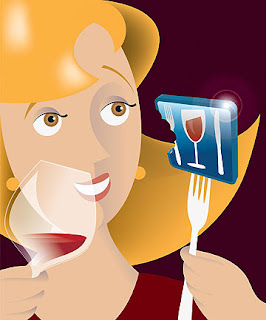
Rogue online reviewers are holding restaurants to ransom with their scathing remarks. Websites such as MenuMania, Dineout and menus.co.nz give picky and negative diners space to vent their views with little accountability, restaurant owners say. And the remarks can't be removed. Eight Point Two is regarded as one of Auckland's top places to eat out. But owner Lindsay Swannack cringes each time a review email pings into his inbox. "You tend to look at the bad ones more than the good ones. It's human nature,' Swannack said. He is frustrated by the lack of transparency of one-off reviewers and those who are near impossible to please. "You can't defend yourself. We take these very personally - well I do. It really does hurt." Swannack said he would rather see reviewers visit a restaurant several times in order to give a fair assessment, than arrive on a busy Saturday night and complain. Although a restaurant may have received plenty of good...

Agony, ecstasy of birth choices

Image
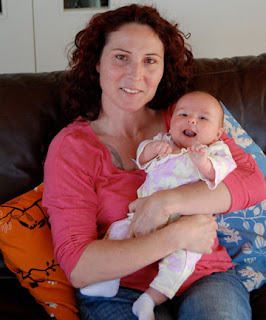
Strong drugs are the most effective form of pain relief in childbirth, according to international research. But some argue the female body is capable of providing the best relief on its own. Michelle Robinson  speaks to some new mothers and finds that what works for some, doesn't work for everyone. NOT FOR EVERYONE: Melanie Phillipson of Wanaka, wished she hadn't had an epidural. Water births, hypnosis and even muffin baking are just some of the ways Kiwi women cope with the pain of childbirth but nothing is more effective than an epidural, a new international study confirms. The Cochrane Database of Systematic Reviews found epidurals, the spinal anaesthesia injection used in 30 per cent of deliveries in New Zealand, to be the most potent form of relief, with water immersion, acupuncture, massage, local anaesthetics and non-opioid drugs also considered effective. However, the review found the same couldn't be said for more obscure therapies such as hypnosis, ar...

Officials' Drinks - It's Your Shout

Michelle Robinson, Marika Hill & Kirsty Johnston Taxpayers are coughing up thousands of dollars to welcome public servants into the government's embrace - then spending even more on boozy farewells when they leave. Figures obtained under the Official Information Act show that almost half a million dollars of public money went on morning tea shouts, powhiri and farewell parties over the past three years. The amount of $453,450 is a conservative estimate as many government-funded organisations - including the police - refused to answer questions, preferring to keep their spending secret. Other organisations could provide only the figures for the most recent event held, due to a lack of detailed accounting reports into workplace shouts and cultural occasions. This was despite State Services Commissioner Iain Rennie saying transparency was crucial to maintaining a high level of public trust in state services. The Sunday Star-Times investigation into “morning tea tax” fou...

Conchords Take on Flying Form

Image
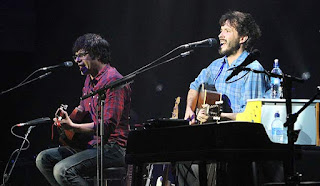
From the distant future - the year 2000, to the more innocent time of 1353 - the Flight of the Conchords took its vocal Auckland audience on a journey through the ages. Kiwi comedy folk duo Jemaine Clement and Bret McKenzie kicked off electro-pop disco beat 'Too Many Dicks on the Dancefloor', complete with high-tech sound effects and a cameo rap from their good friend and American TV co-star Dave Mohumbhai aka Arj Barker. The tune brought immediate cheers mingled with laughter from the hundreds of vocal fans gathered in the Auckland Town Hall. Donning cardboard box hats, Clement and McKenzie cleverly swivelled their headgear around to reveal silver aluminium foil robot hats which matched their shiny shirts for their classic futuristic tune 'Humans are Dead'. "We got the idea from Gaga," they said of the costume change. Another quick change saw the boys swap into simple, colourful plaid shirts and receive a wipe down from 'Matt the hairdresser tu...

People 'Worried' to Report Dolphin Deaths

By Michelle Robinson & Kirsty Johnston People are still afraid to report on dolphin deaths due to repercussions from the fishing industry, a University of Otago zoology professor says. A critically endangered Maui's dolphin was found dead by a member of the public in Taranaki last week. The dolphin, of which only 54 are believed to be left, was found by a member of the public on Thursday or Friday on a beach near Pungarehu, south of New Plymouth. It was collected by the Department of Conservation and taken to Massey University for an autopsy. It's not yet known if the dead dolphin is a Maui or closely related Hector's dolphin. A latest population survey found a couple of Hector's mingling further north than usual with the Maui's dolphin. Otago professor Liz Slooten said it would be "hard to get information out of the tiny community of Parihaka''. It would be the second Maui's dolphin found dead in Taranaki this year. Another, a fe...

Buzz Over Drugged Up Bee Study

Image
SLOW BUZZ: Honey bees have shown their usually impeccable sense of time is slowed under general anaesthesia. An Auckland study using honey bees to prove the jet-lag effects of anaesthesia is creating quite a buzz. Drugged-up honey bees were used in tests at Cornwall Park and Mangere to show how their usually impeccable sense of time was slowed under general anaesthesia, with the results of the Auckland University study published in the Proceedings of the National Academy of Sciences' latest issue. "It sounds unusual to you, but it's quite sensible to use bees," lead researcher from the Department of Anaesthesiology and School of Biological Sciences, Dr Guy Warman, said. "They have a time sense unlike any other creatures. They can know exactly what time of the day they think it is by a range of functions including their 'waggle' dance and by following the direction of the sun." The bees were trained to travel to a specific food source...